top of page
All Posts


Webinar Recap: How Genetics Shapes the Way We Respond to Drugs
Recorded webinar with Dr. Rahul Bhoyar on how genes influence medicine response. Understand pharmacogenomics, real examples & personalized prescriptions
aneeshhiremath3
Nov 9, 20251 min read


Webinar Replay: The Power of Knowing Early - Genomic Screening for Newborns
Watch our webinar on genomic newborn screening with Dr. Bani Jolly. Learn how early DNA insights can protect your child’s health.
aneeshhiremath3
Oct 12, 20252 min read
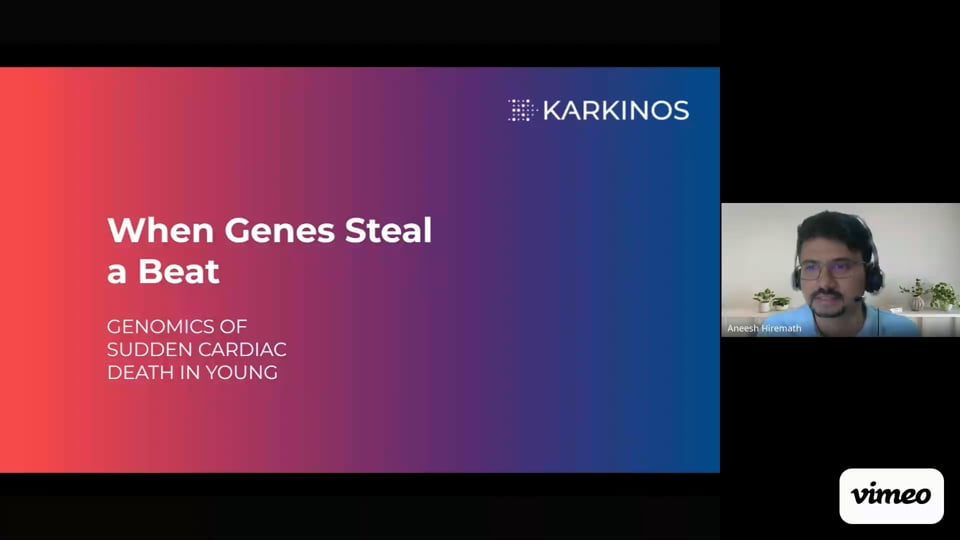
Sudden Cardiac Death & The Genetic Link: Insights from Dr. Vinod Scaria
Sudden cardiac death can strike even healthy young adults without warning. In this webinar, Dr. Vinod Scaria, Clinician Scientist and Chief Data Officer at Karkinos Healthcare, explains the genetic and inherited risks, early warning signs, and preventive steps. Hosted as part of the Codexa Genomics Program, this session shows how whole genome sequencing helps individuals uncover hidden health predispositions and take proactive steps for themselves and their families.
aneeshhiremath3
Sep 7, 20251 min read
Beyond Coincidences – Taking Control of Your Cancer Risk
In families with an inherited faulty gene, a unique pattern of specific cancers often weaves through generations, painting a story that’s deeply intertwined with your family’s history. Understanding the strength of this genetic tale involves a closer look at who in your family has faced the challenge of cancer, the types they’ve encountered, and their age at diagnosis. The more relatives who share similar or related cancer experiences, especially if they were diagnosed at a y
aneeshhiremath3
May 14, 20251 min read
Can We Democratise Cancer Prevention with Germline Testing?
As the cost of sequencing plummets and our understanding of cancer genetics leaps forward, a critical debate surrounds who should undergo germline testing and how widely it should be offered. Some argue for focusing on high-risk groups or cases where results can directly inform treatment, while others see potential for universal testing due to cost drops and increasing knowledge. Genetic counseling is crucial for navigating these issues and maximizing the benefits of testing,
aneeshhiremath3
May 14, 20251 min read
Pre-emptive Germline Testing for Cancer
India faces over 1.4 million new cancer cases annually, making early detection vital. Pre-emptive germline testing through whole-genome sequencing offers faster, comprehensive insight into inherited cancer risks. It enables early detection, carrier screening, and cascade testing in families. Paired with pharmacogenomics, it helps tailor treatments to individual genetics, improving outcomes and reducing side effects—ushering in a new era of proactive, personalised cancer care.
aneeshhiremath3
May 14, 20252 min read
Inherited Risk, Individual Solutions: Genomics and Germline Testing for Cancers
Most hereditary cancer syndromes follow an autosomal dominant pattern of inheritance, indicating a 50% chance that a child will be affected if one of their parents carries the genetic mutation. Recognizing this hereditary link early becomes paramount. Pre-emptive testing, a proactive measure, allows individuals with a family history of hereditary cancer syndromes to undergo genetic testing before any symptoms manifest. This early detection not only unveils potential risks but
aneeshhiremath3
May 14, 20252 min read
BRCA and Beyond: The Genetics of Inherited Cancers
Our DNA weaves a complex genetic code. All cancers arise from aberrations, either somatic (acquired, not inherited) or germline (ancestral echoes, present from conception). Germline mutations, like in BRCA1/2, don't guarantee cancer but can predispose individuals to it. While most cancers are sporadic, nearly 10% have germline causes. These pathogenic mutations are heritable warning bells, illuminating heightened cancer risk not just for one person, but for future generations
aneeshhiremath3
May 14, 20252 min read
Democratising Cancer Prevention with Germline Testing
A seamstress's tale of familial tragedy led Dr. Warthin to study 'Family G,' later identified as Lynch Syndrome. This sorrowful start became a beacon of hope. Decades on, Dr. King's research unveiled BRCA1's link to breast cancer. Angelina Jolie's public BRCA1 journey then sparked the 'Angelina Jolie effect,' massively increasing awareness of genetic testing for hereditary cancers, highlighting its role in personalized healthcare decisions and empowering individuals to unders
aneeshhiremath3
May 14, 20252 min read
bottom of page